Discover top swimming pool heating systems that blend performance, energy efficiency, and remote control. This guide highlights five reliable options to help you extend your swim season, manage water temperatures precisely, and maximize energy savings. Each section includes key features, control options, and suitability for different pool sizes and setups.
| Product | Pool Type | BTU / Gallon Capacity | Control | Notes |
|---|---|---|---|---|
| Aquastrong Inverter Swimming Pool Heat Pump (55,000 BTU) | Above Ground / Inground | 55,000 BTU; up to 16,000 gallons | WiFi App & Control Panel | Dual-mode heating/cooling; energy-saving inverter technology |
| Aquastrong Inverter Swimming Pool Heat Pump (75,000 BTU) | Above Ground / Inground | 75,000 BTU; up to 21,000 gallons | WiFi App & Control Panel | Faster heating with high capacity; strong performance in cooler climates |
| Varpoolfaye 16,000 BTU Heat Pump (5,000 Gallon) | Above Ground | 16,000 BTU; up to 5,000 gallons | WiFi App Control | Multi-season heating and cooling; efficient electric heating |
| Doniks 72,000 BTU Pool Heater | Inground / Above Ground | 72,000 BTU; up to 9,000 gallons | Digital display; App control | Inverter technology with smart defrost; significant energy savings |
| MICOE 100,000 BTU Pool Heat Pump | Above Ground / Inground | 100,000 BTU; large capacity | Smart app control | High-capacity heater for bigger pools; extended season potential |
Note: All models support heating and, in most cases, cooling modes to help manage water temperature year-round. When selecting a system, consider pool size, climate, electrical requirements, and whether WiFi control is important for your routine.
Aquastrong 55,000 BTU Inverter Heat Pump

Extend your swim season with balanced heating and cooling. This 55,000 BTU unit targets temperatures between 47°F and 104°F for heating and 47°F to 83°F for cooling. The inverter technology helps optimize energy use by adjusting output in real time, delivering notable efficiency improvements over traditional electric heating. App control enables remote temperature adjustments, scheduling, and energy monitoring, making it suitable for larger pools up to 16,000 gallons in diverse climates.
Aquastrong 75,000 BTU Inverter Heat Pump
This higher-capacity model delivers 75,000 BTU to heat larger pools or cope with cooler weather more quickly. Its dual-mode heating and cooling supports year-round operation, while the DC inverter technology aims to improve efficiency with a high COP. Users can monitor energy use and set heating schedules via the app or control panel, offering flexibility for frequent swimmers or homes with variable schedules. Suitable for pools up to about 21,000 gallons.
Varpoolfaye 16,000 BTU Electric Heat Pump

Designed for smaller to mid-size above-ground pools, this heater provides up to 16,000 BTU for pools around 5,000 gallons. It supports heating and cooling within a broad temperature range and includes WiFi control for remote management. The titanium heat exchanger contributes to durability and efficient heat transfer, while a compact footprint makes installation easier for smaller setups.
Varpoolfaye 16,000 BTU Heat Pump (2nd Model)
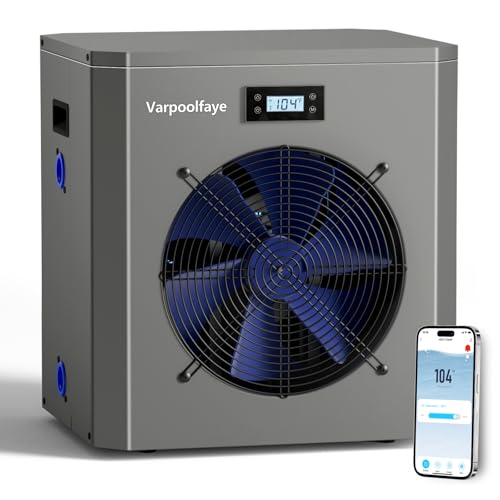
This model also targets pools up to 5,000 gallons with a 16,000 BTU rating and offers heating from 59°F to 104°F and cooling from 46°F to 82°F. WiFi app control and scheduling help maximize convenience and energy efficiency. It emphasizes quiet operation and energy-conscious design, making it a good fit for residential settings where noise and footprint matter.
SunHeater Smart Pool S601 Inground Solar Heating System

For solar-first pool heating, the SunHeater S601 provides a polypropylene heat collector that integrates with existing inground pools. With 80 square feet of solar panels, it leverages direct flow to heat water, offering a low-cost, renewable option to extend the swimming season. This solution is solar-based and complementary to electric heat pumps, particularly in sunny climates or as a supplementary heating layer.
Buying Guide
Key considerations when choosing a swimming pool heating system:
- Pool size and volume: Match BTU output to your pool’s gallons to avoid under- or over-heating and to maintain efficiency.
- Climate and desired season: Colder climates or longer seasons benefit from higher BTU units and reliable cooling modes to stabilize temperatures year-round.
- Energy efficiency: Inverter or DC systems adjust power output to real-time demand, improving COP and reducing running costs compared with traditional electric heaters.
- Control and scheduling: WiFi-enabled controls and mobile apps provide convenience for remote temperature management and energy monitoring.
- Maintenance and durability: Heat exchangers (titanium preferred for saltwater), defrost features, and quiet operation contribute to long-term reliability.
- Electrical requirements: Check voltage (often 110–240V) and ensure electrical setup complies with local codes and safety standards.
- Solar integration: Solar heating (like the SunHeater S601) can supplement electric heat pumps, lowering energy use and operating costs in sunny areas.
When comparing models, consider total installed cost, ongoing energy consumption, and compatibility with your pool type (above-ground vs. inground) and any existing solar or electrical infrastructure.