Discover top indoor surf boards designed to simulate the surfing experience at home while boosting balance, core strength, and coordination. This guide highlights five popular options suitable for living rooms, basements, or small gyms. Each product is evaluated by its build, adjustability, and safety features to help you choose the right board for your fitness goals.
Summary of chosen products:
| Product | Brand | Key Benefit | Notes |
|---|---|---|---|
| Balance Board Indoor Surfboard with Wheel | AskTOM | Simulated surfing and core training | 29–31 inch length, indoor-friendly |
| Yes4All Surf Balance Board Trainer | Yes4All | Adjustable stoppers for skill progression | Supports up to 300 lbs |
| Balance Board Indoor Surfboard (Baby Blue) | AskTOM | Compact indoor surfing workout | Same 30.7-inch length |
| XCMAN Surf Balance Board Trainer | XCMAN | Non-slip surface, durable wood | Supports up to 350 lbs |
| Adjustable Distance Balance Surfboard | AskTOM | Customizable distance and safety | 11–22 inch options |
Balance Board Indoor Surfboard With Wheel — AskTOM

The Balance Board Indoor Surfboard with Wheel by AskTOM is designed to simulate the feel of surfing from the comfort of your home. It emphasizes core strength, balance, and overall stability, making it suitable for athletic training and board sports enthusiasts. Its 30.7-inch length fits typical indoor spaces, and the wheel-based design encourages fluid motion similar to riding a wave. The board’s construction focuses on durability and a low-profile footprint for apartment setups, helping users build muscle memory for balance-intensive activities.
Yes4All Surf Balance Board Trainer

The Yes4All Balance Board Trainer includes adjustable stoppers that let users control the rolling distance, enabling progression from beginner to advanced levels. Crafted from 15-ply pressed wood, the board supports up to 300 pounds and features a non-slip surface with a thick TPE-covered roller for smooth operation. This setup helps users improve coordination, agility, and core strength while targeting the hips, legs, and lower back for balanced training across sports like surfing and skateboarding.
Balance Board Indoor Surfboard — Classic Style

This Balance Board Indoor Surfboard from AskT0M emphasizes a home-friendly surfing experience with an emphasis on balance training and core development. The 30.7-inch board size makes it versatile for apartments and homes with limited space. The design invites consistent practice to improve posture, stability, and muscle activation across the core and lower body. While maintaining a lightweight profile, it delivers a solid platform for daily workouts, surf-inspired drills, and dynamic balance challenges.
Balance Board Indoor Surfboard — Baby Blue

The Baby Blue edition of the Balance Board Indoor Surfboard mirrors the flagship design with a 30.7-inch deck, optimized for indoor use. It targets core stability, balance, and coordination, offering a low-impact yet effective workout. The wheel-based balance plane fosters multi-directional movement, encouraging users to adapt their centers of gravity as if carving through water. The visual appeal of the blue finish also makes it a motivating piece of home gym equipment.
XCMAN Surf Balance Board Trainer — Wood

The XCMAN Surf Balance Board Trainer combines a rugged wooden deck with an anti-slip surface for reliable traction. It supports up to 350 pounds and includes a smooth wooden roller designed to reduce floor scratching on various surfaces. By integrating this board into routine workouts, users develop balance, coordination, and body control across activities such as surfing, snowboarding, and hockey. The durable construction makes it suitable for high-frequency training without compromising floor safety.
Adjustable Distance Balance Surfboard — Indoor/Outdoor
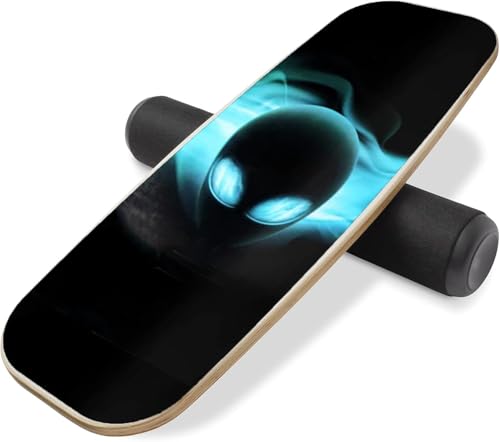
The Adjustable Distance Balance Surfboard focuses on customizable distance options with 11, 16, and 22-inch settings and a weight capacity up to 300 pounds. Its two detachable stoppers let users tailor the challenge to their skill level, making it accessible for beginners while providing room to advance. The board uses 15 layers of pressed wood and a non-slip surface to enhance safety during balance drills, cardio intervals, and sport-specific training. This model supports both indoor and outdoor use, depending on space and flooring.
Buying Guide: Key Purchase Considerations
- Intended use: Consider whether you want general balance training, sport-specific practice (surfing, skateboarding, snowboarding), or rehabilitation-friendly workouts. Choose a board with appropriate surface grip and a roller that suits your environment.
- Adjustability: Boards with adjustable stoppers or distance settings allow you to scale difficulty over time, making them suitable for beginners and advanced athletes alike.
- Weight capacity and durability: Look for boards built with sturdy materials (wood or reinforced composites) and a high weight rating if you expect frequent, intense sessions.
- Floor compatibility: If you have hard floors, prioritize non-slip surfaces and protective rollers to prevent floor damage. Carpet-friendly options may glide differently and require more careful control.
- Portability and space: Measure your practice area to ensure the board fits comfortably. Some models are longer and better suited for open rooms, while compact options work well in smaller spaces.
- Safety features: Emphasis on non-slip surfaces, edge protection, and stable rolling mechanisms reduces the risk of falls during dynamic drills.
- Maintenance: Consider boards with durable finishes or coatings that resist wear and are easy to clean after workouts.
- Price-to-value: Compare build quality, warranty, and included features to ensure you get long-term value for your fitness goals.
- Multi-sport versatility: If you plan to use the board for multiple activities (surfing, skating, hockey), select a model with a wide range of motion and robust construction.
Each featured product provides a balance-focused workout with varying degrees of adjustability and durability. When selecting, prioritize how you’ll use the board, your space, and your safety needs to maximize results and minimize risk during training.