When cooling and heating large pools or spas, a powerful 200,000 BTU-rated heater can dramatically extend your swimming season. Below are five gas-powered options that align with the 200,000 BTU capability or serve close, high-output needs for in-ground pools. This guide highlights efficiency, durability, and installation considerations to help you compare models and choose the right fit for American homes and climates.
The following quick-reference table summarizes the five selected products, focusing on their primary heating capacity, type, and key strengths:
| Product | Brand | BTU Range | Type | Notable Strengths |
|---|---|---|---|---|
| Hayward W3H200FDN | Hayward | 200,000 BTU | Natural Gas | Premium performance, cupro nickel exchanger, energy-efficient hydraulics |
| Raypak 009218 | Raypak | 336,000 BTU | Natural Gas | Integral fin copper exchanger, corrosion-free headers |
| Hayward W3H400FDN | Hayward | 400,000 BTU | Natural Gas | High-capacity, robust hydraulic design |
| Master Temp Gas Pool Heater | Generic | 250,000 BTU | Natural Gas | Compact design, pre-mixed gas combustion |
| Hayward W3H150FDN | Hayward | 150,000 BTU | Natural Gas | Efficient, reliable for mid-to-large pools |
Hayward W3H200FDN Universal H-Series 200,000 BTU Heater
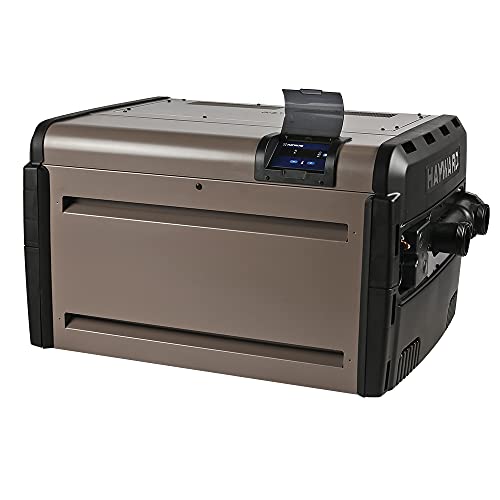
The Hayward W3H200FDN is designed to deliver dependable heating for in-ground pools and spas with a 200,000 BTU natural gas input. A cupro-nickel heat exchanger provides strong resistance to corrosion in varied water chemistries, extending the heater’s life in outdoor environments. Its hydraulic design aims to reduce circulator pump run time, translating to noticeable energy savings for larger systems. This model is a solid choice for pools requiring robust heating without sacrificing efficiency. Installation considerations include matching water flow and ensuring proper venting, as with other natural gas heaters.
Raypak 336000 BTU Natural Gas Pool Heater

Raypak’s PR336AENC49 offers a higher capacity option at 336,000 BTU, suitable for very large pools or spas where rapid heating is needed. Its integral fin copper exchanger and corrosion-resistant polymer headers are designed to withstand long-term exposure to pool chemistry. The device includes backlit LCD controls for easy operation and monitoring. While it provides substantial heating power, the higher BTU rating means careful sizing to avoid oversizing, which can impact efficiency in milder climates.
Hayward W3H400FDN Universal H-Series 400,000 BTU Heater

The Hayward W3H400FDN is a higher-capacity option that can meet aggressive heating demands for large or multiple pools. Its 400,000 BTU input delivers fast warming, making it suitable for quickly elevating water temperature after cold nights or for high-use facilities. As with other H-Series units, it benefits from the cupro-nickel exchanger and a hydraulic design aimed at reducing pump run time. Installation considerations should include adequate space for venting and ensuring the unit is properly sized for the pool volume to maintain efficiency.
Master Temp Gas Pool Heater, 250,000 BTU

The Master Temp 250,000 BTU gas pool heater emphasizes compact design and straightforward installation, with pre-mixed gas combustion to promote consistent heating. While marketed under a generic brand, its emphasis on reliability and efficient operation makes it a practical option for mid-to-large pools that require steady performance without extreme heating loads. It’s important to confirm local gas supply and venting requirements to optimize efficiency and safety.
Hayward W3H150FDN Universal H-Series 150,000 BTU Heater

The Hayward W3H150FDN provides efficient heating at a lower BTU rating, suitable for mid-to-large pools where intense heating is not required every day. The cupro-nickel exchanger offers good resistance to water chemistry variations, and the H-Series hydraulic design supports energy-conscious operation. This model is a practical option when you want dependable gas heating without stepping up to the largest heaters. Proper sizing and water flow are essential to maintain consistent temperatures.
Buying Guide: Key Purchase Considerations
- Pool size and heating goals: Larger pools or fleets of pools may justify high-capacity units (e.g., 336,000–400,000 BTU), while mid-sized pools can be efficiently heated with 150,000–250,000 BTU units.
- Gas type and efficiency: Natural gas heaters typically offer steady costs and reliable performance. Check for features that improve efficiency, such as advanced heat exchangers and hydraulic optimization.
- Heat exchanger material: Cupro-nickel and copper exchangers resist corrosion, extending life in pools with aggressive chemistry. In exposed environments, corrosion resistance is especially important.
- Hydraulic design and pump energy use: Heaters with hydraulic optimization can reduce pump run time and save energy. Ensure your pool’s pump size and plumbing match the heater’s flow requirements.
- Ventilation and installation space: Gas heaters require proper venting and adequate installation clearance. Confirm outdoor clearance, gas line sizing, and vent piping compatibility.
- Maintenance and accessibility: Access to service ports, easy-to-read controls, and availability of replacement parts influence long-term upkeep and uptime.
- Warranty and manufacturer support: A strong warranty and accessible customer support are valuable for peace of mind with high-capacity equipment.
- Operating climate considerations: In colder climates, a higher BTU model can combat heat loss more effectively, but oversized units may operate less efficiently in mild weather.
Performance and Compatibility Comparisons
- Capacity versus pool size: For very large volumes, higher BTU units deliver faster heat-up times, but ensure the system is properly matched to avoid oversizing and inefficiency.
- Material resilience: Exchangers with cupro-nickel or titanium alloys offer better longevity in challenging water chemistries and salt systems.
- Energy implications: Some units emphasize energy savings through hydraulic design and advanced gas mixing; others rely on sheer heating power. Balance cost, climate, and usage.
- Maintenance needs: Simpler control layouts can ease routine checks, but comprehensive diagnostics on some models aid troubleshooting and deployment.